Choose the size of a social commitment instead of treating connection as all or nothing
Wanting connection and having limited energy can coexist. A large gathering is not the only form of contact, and declining it does not have to mean withdrawing from everyone. A useful decision considers the person, setting, duration and exit arrangement without prescribing how social an adult should be.
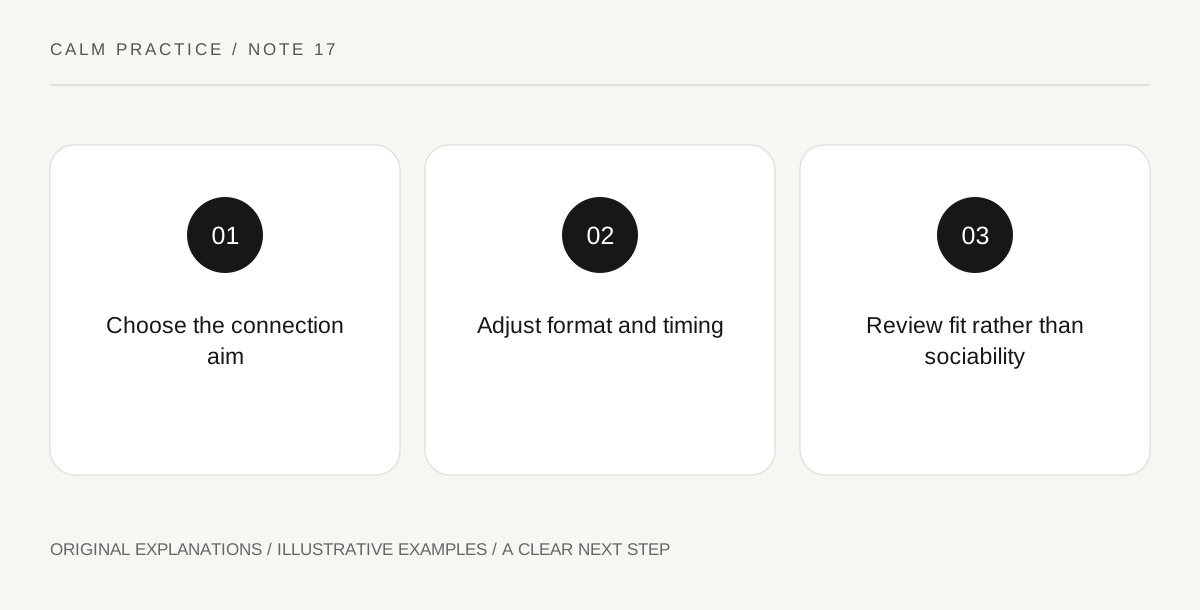
Original explanatory diagram. Read the full method and limitations below.
Name what you want from the contact
You might want company, a shared activity, a brief update or a deeper conversation. Those aims can need different settings. NHS guidance recognizes that loneliness and connection vary across people and circumstances. Do not assume that being in a large crowd guarantees connection or that enjoying solitude means something is wrong. Start with your own preference and current capacity. A clear aim makes it easier to choose an arrangement that fits. It also prevents accepting an event only because connection has been reduced to a rule that every invitation must be accepted.
Change the format before abandoning the person
Consider a shorter visit, a smaller group, an accessible venue or another suitable channel. Ask rather than assuming the other person will understand an unspoken limit. A practical message can say you would like to see them and suggest an arrangement you can manage. Keep genuine health, care and access needs visible. Do not promise a long evening while privately planning to leave abruptly. A different format may serve the relationship better than attending in a way that leaves you overwhelmed or resentful. It is also acceptable that some invitations do not fit and another opportunity will be needed.
Keep a distinction between a preferred limit and an excuse you are expected to prove. You can state that a shorter visit fits without supplying a detailed account of exhaustion. A trusted person may welcome more context, but disclosure remains your choice. Likewise, respect another person's limit when they cannot accept the alternative you propose. Connection works through mutual arrangements, not a requirement that one person always adapt.
Make the exit ordinary and respectful
If timing matters, state it early and arrange transport or responsibilities accordingly. Avoid an elaborate excuse that creates another story to maintain. You do not owe every acquaintance detailed health information. A simple departure plan can make attendance more manageable without demanding that others monitor your energy. In a shared activity, consider the practical effect of leaving and agree any handover. Keep the plan flexible where possible. This is not a treatment for social anxiety or a rule to leave whenever discomfort appears; professional guidance may be relevant when avoidance or distress is persistent and limiting.
Review connection rather than performance
Afterward, ask whether the contact felt meaningful or at least workable, and whether the format fit. You do not need to grade how entertaining you were or compare your sociability with another person's. If you wanted more connection, consider one next suitable contact rather than a full social calendar. If loneliness or distress persists, seek appropriate support. A manageable arrangement can be small and still valuable. The useful outcome is a deliberate choice about contact, with room for rest, access and personal preference, not a demand to become extroverted or to justify every quiet evening.
An illustrative smaller visit
Rina wants to see a friend but cannot manage a large late gathering. She proposes a shorter accessible daytime meeting and explains her available time without sharing private health details. They agree on the format. Rina reviews whether the contact worked rather than treating the declined party as a failed attempt at connection.
Practical checks
Optional checkboxes save only in this browser.
Questions that come up
Does declining a party mean choosing isolation?
Not necessarily. A smaller or different contact may fit better. Consider the pattern and your own needs rather than one invitation.
Should this replace help for persistent social anxiety?
No. Seek qualified support when distress or avoidance is persistent or limits daily life.
References and scope
These sources support the factual background. Examples and exercises are original illustrative teaching material. References do not imply endorsement.
- NHS: Loneliness — Different experiences of connection and gradual manageable social participation.
- NHS: Five Steps to Mental Wellbeing — Connection, learning, kindness and present-moment attention.