Choose a meditation format by comfort and context, not its promised depth
Meditation can mean several kinds of attention practice, and a long eyes-closed recording is only one format. A useful choice begins with source, setting and the ability to stop. It does not require a silent mind, a dramatic experience or replacing treatment with a wellness subscription.
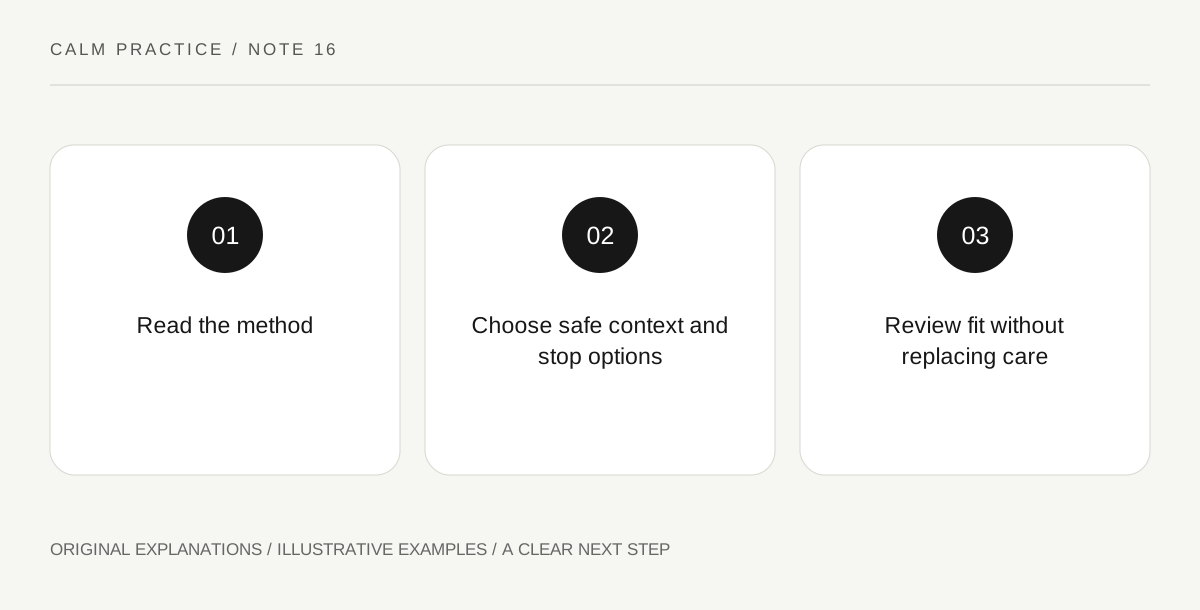
Original explanatory diagram. Read the full method and limitations below.
Read what the practice actually asks
Check whether the session focuses on breathing, a sound, body sensations, imagery or another method. NCCIH describes varied meditation approaches and notes limitations in the evidence and safety information. A title such as deep reset is not a technical description or a guarantee. Preview the instructions and intended audience. Avoid a format that asks you to adopt unfamiliar physical positions, breath restrictions or emotionally intense material without appropriate guidance. The choice should be understandable before you commit time or money. A popular teacher's confidence does not establish clinical qualifications or suitability for every listener.
Read subscription terms separately from the practice description. A free trial may require cancellation, and a daily-streak feature may encourage more use than you want. Those commercial arrangements do not determine the appropriate amount of practice. Choose based on fit and reliable guidance rather than a countdown or badge. If you want to continue without the service, ask whether a suitable freely available source meets the same practical need.
Choose a setting where attention can shift safely
Practice only where you can pause ordinary responsibilities appropriately and are not driving, operating equipment or supervising a continuous-risk task. A supported comfortable position may be more practical than copying a floor pose. If keeping eyes open helps, choose a method that permits that arrangement. Do not assume closing the eyes makes a practice more authentic. Keep needed communication accessible. A recording that encourages complete disconnection may not fit a caregiver or on-call responsibility unless suitable coverage is arranged. The practical environment is part of the choice, not an inconvenience to overcome through determination.
Expect wandering without turning it into a failure score
Attention may move to sounds, plans or thoughts. Follow the source's appropriate guidance for returning, without requiring the mind to stay blank. You do not need to count every distraction or punish yourself by extending the session. If the method becomes distressing, stop and choose another support. Internal attention does not feel helpful to everyone. A shorter or different format may fit better, but it should not become a contest to build the longest streak. The goal of this everyday review is a suitable optional practice, not proving expertise or reaching a promised mental state.
Keep health decisions separate from the recording
Do not stop medicines, cancel therapy or delay assessment because a meditation program claims to replace care. Discuss persistent symptoms or a relevant mental-health history with an appropriate professional. NCCIH cautions against using meditation to replace conventional care or postpone seeing a provider. Review practical value in modest terms: clear instructions, manageable cost and a welcome experience. A subscription can be declined even if the practice itself interests you. No consumer app can promise that a particular session will cure anxiety, eliminate stress or deliver the same result for everyone who listens.
An illustrative format choice
Amir wants to try meditation but dislikes closing his eyes in an unfamiliar room. He chooses an appropriate source that permits a comfortable eyes-open format and a clear stop option. He keeps his existing care plan unchanged and judges the recording by clarity and fit rather than whether his mind becomes blank.
Practical checks
Optional checkboxes save only in this browser.
Questions that come up
Is eyes-closed practice always required?
No. Formats differ. Choose an appropriate method and setting that fit your comfort and responsibilities.
Does distraction mean I failed?
No. Do not turn attention wandering into a failure score. Follow suitable guidance and stop if the practice is distressing.
References and scope
These sources support the factual background. Examples and exercises are original illustrative teaching material. References do not imply endorsement.
- NCCIH: Meditation and Mindfulness, Effectiveness and Safety — Meditation methods vary and may not suit every person or replace care.