Make an avoided administrative task small enough to begin
An unopened form or appointment request can grow into a larger burden while you avoid it. A useful first step is concrete and limited, with enough information to begin safely. This is an everyday planning application, not a self-directed exposure treatment or a reason to confront a dangerous situation without support.
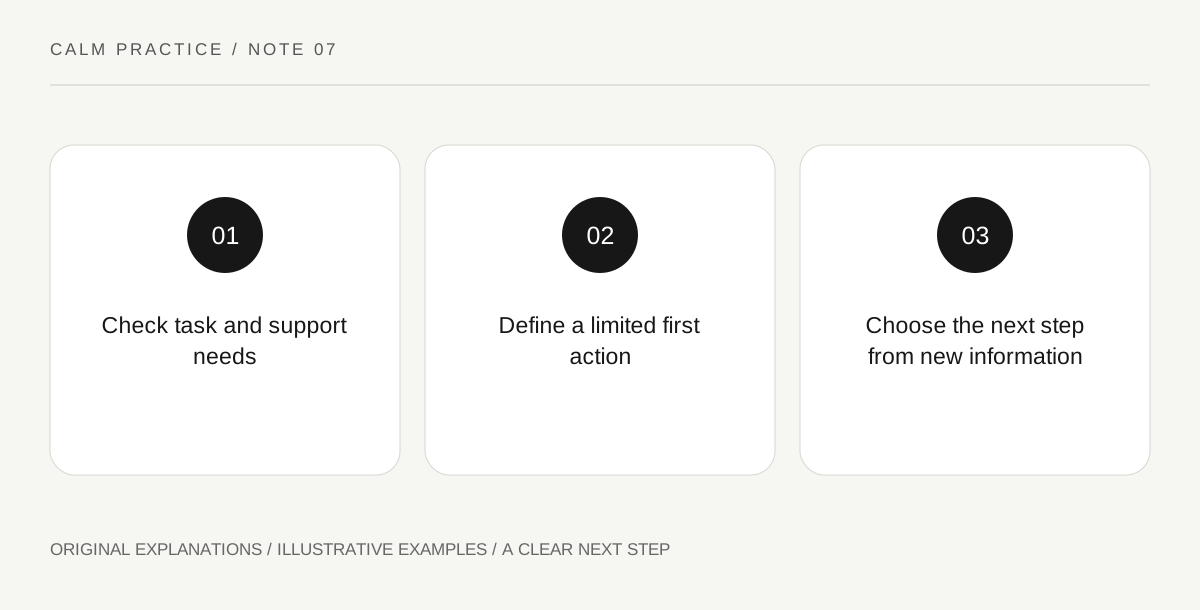
Original explanatory diagram. Read the full method and limitations below.
Check whether the task is safe and appropriate
Choose an ordinary administrative task such as opening a nonurgent letter or finding a service's contact route. Confirm that you are authorized to handle it and that no urgent deadline or safety issue needs immediate specialist help. NHS guidance on facing fears discusses manageable steps, but serious anxiety, trauma or high-stakes decisions may need professional support. Do not use this article to force yourself into an unsafe interaction. The first question is whether the task belongs to you and what help it requires. A tax, legal or medical issue may need an expert rather than more determination.
Define a first action with a visible finish
Replace sort out the paperwork with open the envelope and identify the sender, or find the official booking page. The action should be small enough to complete without solving the entire matter. Put the necessary materials in one accessible place and avoid adding unrelated organization. You do not need a perfect desk or a new filing system before reading one page. Keep the endpoint explicit so the task does not expand unexpectedly. If the first action reveals an urgent requirement, respond through the appropriate route rather than preserving a tiny-step plan that no longer fits the situation.
Allow support without handing over every decision
A trusted person might sit nearby, help read instructions or clarify where to seek qualified advice. Agree what help is wanted and protect personal information. They should not submit a form or make a commitment without authorization. Ask one clear question when the instructions are confusing instead of repeatedly searching for a reassuring summary. Keep the original source available. A practical helper can reduce access barriers while you retain the decisions you want to make. If the task remains overwhelming, professional support may be appropriate; that is not evidence that the first step was too small or that you failed.
Choose the next step after the first one
Once the limited action is complete, decide what follows based on what you learned. You may continue, save a specific question or arrange a suitable appointment. Avoid turning a successful opening into a demand to finish every related task immediately. Record the next action where you will find it, then stop if that was the plan. Review whether the method helped you begin without creating another elaborate ritual. Persistent avoidance affecting daily life deserves qualified support. The useful outcome is a clearer task and an appropriate next step, not a promise that discomfort disappears as soon as you start.
Use the first action to discover the real task's size. An envelope may contain a simple confirmation rather than the complex problem you imagined, or it may reveal a question needing expert help. Either result is information. Keep the next step based on that new information rather than the original fear. If the task is larger than expected, define an appropriate support route instead of expanding your own responsibility automatically.
An illustrative unopened letter
Nell has avoided a routine service letter. She chooses to open it and identify any deadline, with a trusted person nearby if needed. The letter asks for a simple update, so she saves the official contact route and plans the next action. She does not redesign her entire filing system before reading it.
Practical checks
Optional checkboxes save only in this browser.
Questions that come up
Is the smallest step always opening the task?
Not necessarily. If an urgent or specialist issue is involved, contacting the appropriate service may be the first useful action.
Should I force this method for severe anxiety?
No. Seek appropriate professional support when avoidance is persistent, overwhelming or linked to a condition needing treatment.
References and scope
These sources support the factual background. Examples and exercises are original illustrative teaching material. References do not imply endorsement.
- NHS: Facing Your Fears — Small manageable approaches to avoided situations, with appropriate support.