Thoughts and uncertainty3 min read
Waiting for information can turn a useful check into repeated refreshing that supplies no new answer. A practical update plan distinguishes an official change from the urge to feel certain. It preserves urgent communication while giving the waiting period a workable structure, without promising that you will stop feeling concerned.
Read the guide ↗
Thoughts and uncertainty3 min read
A missed attachment or awkward sentence can quickly become a broad conclusion that you are incompetent. A balanced response keeps the actual problem visible and leaves room to repair it. The aim is accurate thinking and proportionate action, not forcing a positive slogan or denying a real consequence.
Read the guide ↗
Thoughts and uncertainty3 min read
A value can guide a small action even when your mood is uncertain. It describes a direction you care about, such as kindness, learning or reliability, rather than a target that must be completed perfectly. This approach helps make the next choice concrete without promising that meaningful action removes distress.
Read the guide ↗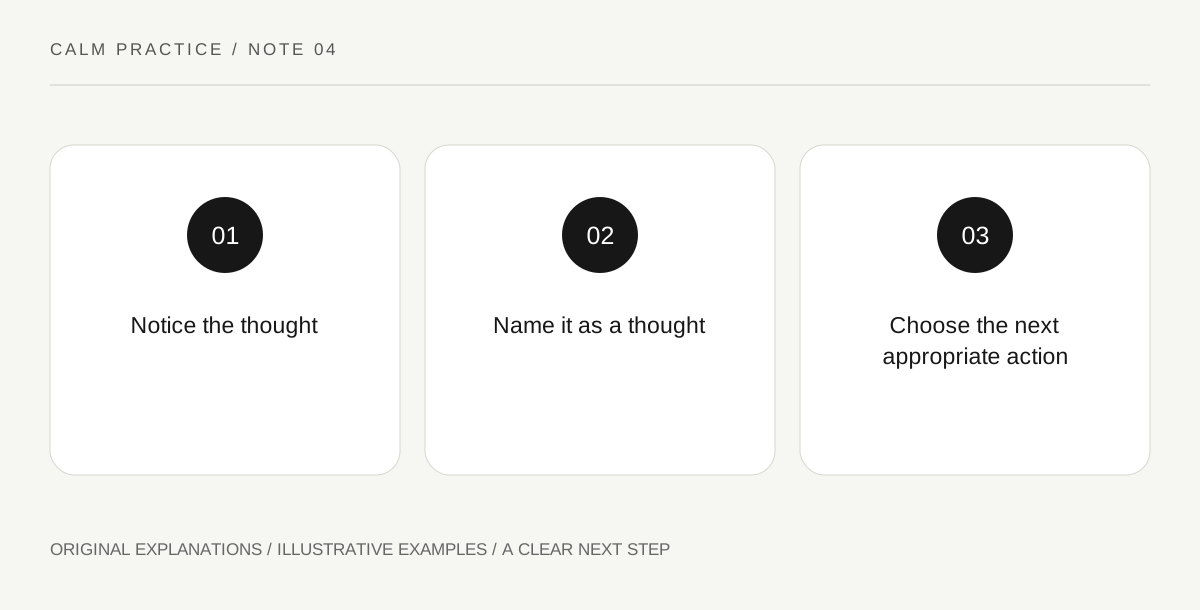
Thoughts and uncertainty3 min read
A thought can be loud, repetitive or upsetting without being a command you must follow. Noticing it as a thought can create a little space for the next decision. This is an optional everyday practice, not a way to suppress thoughts or a substitute for care when experiences are distressing or unsafe.
Read the guide ↗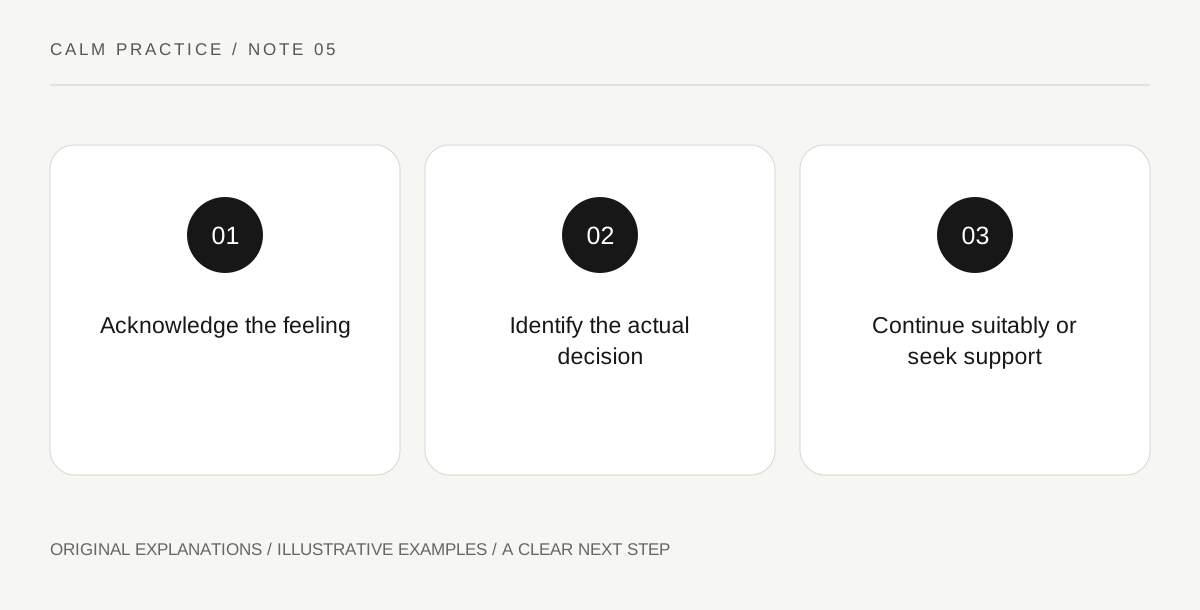
Thoughts and uncertainty3 min read
A disappointing message can leave a feeling that does not resolve on schedule. It may be possible to acknowledge that feeling while continuing an ordinary part of the day. This does not mean approving what happened, forcing acceptance of harm or avoiding support; it means leaving space for experience without demanding an immediate emotional fix.
Read the guide ↗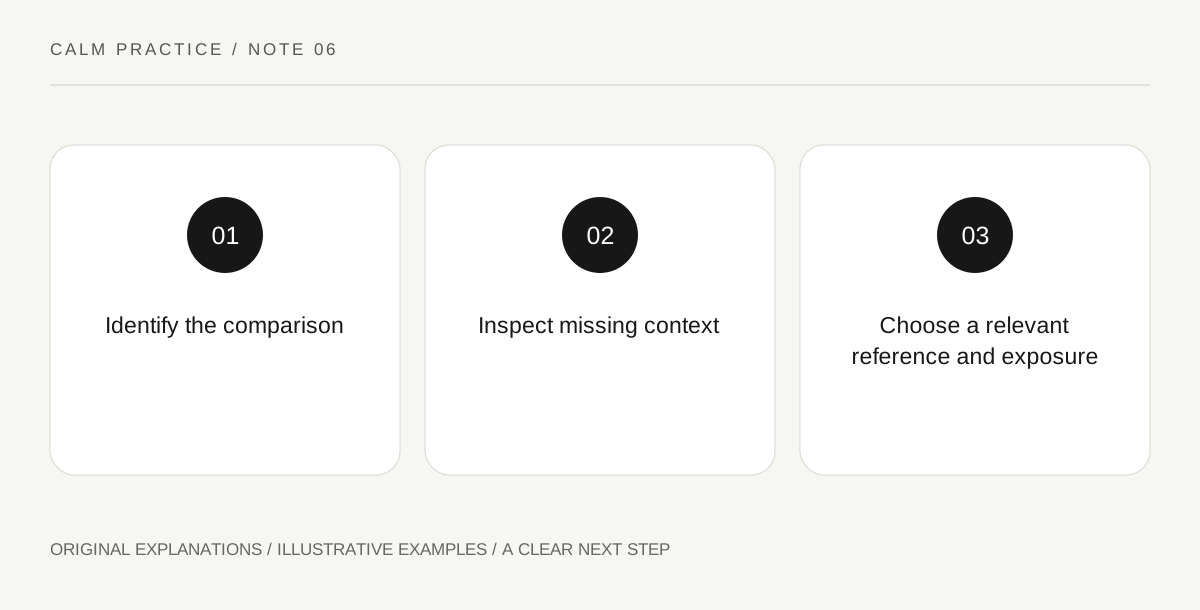
Thoughts and uncertainty3 min read
A feed can show finished homes, promotions and polished routines without showing the circumstances behind them. Comparing that display with your whole day can create a distorted question. A practical review asks what is visible, what is missing and whether the content serves a useful purpose for you.
Read the guide ↗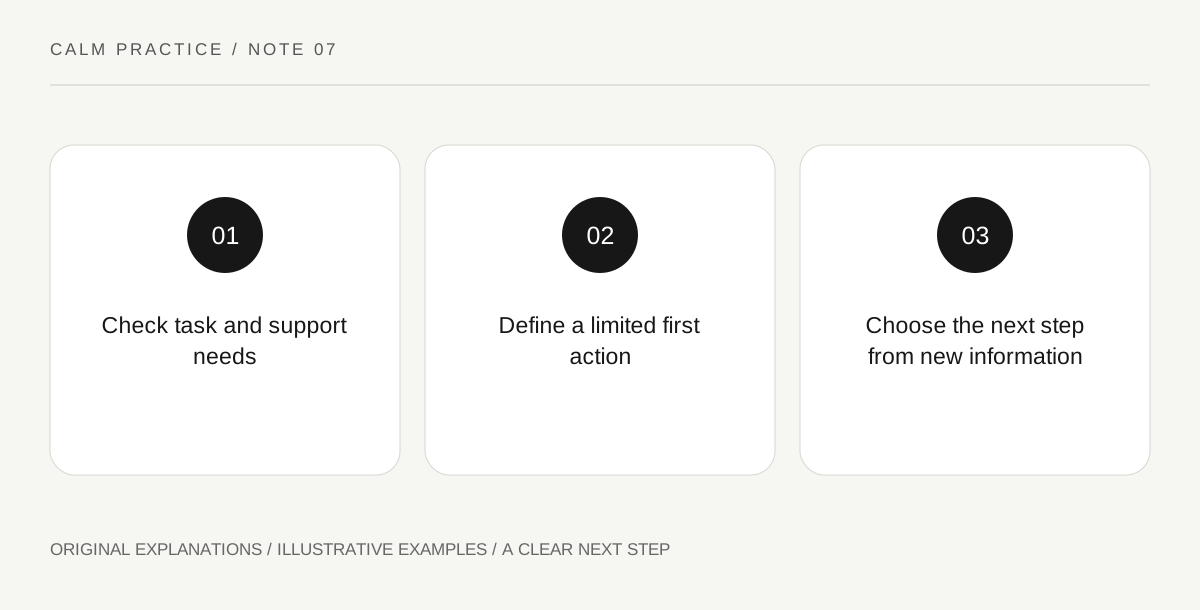
Everyday reactions3 min read
An unopened form or appointment request can grow into a larger burden while you avoid it. A useful first step is concrete and limited, with enough information to begin safely. This is an everyday planning application, not a self-directed exposure treatment or a reason to confront a dangerous situation without support.
Read the guide ↗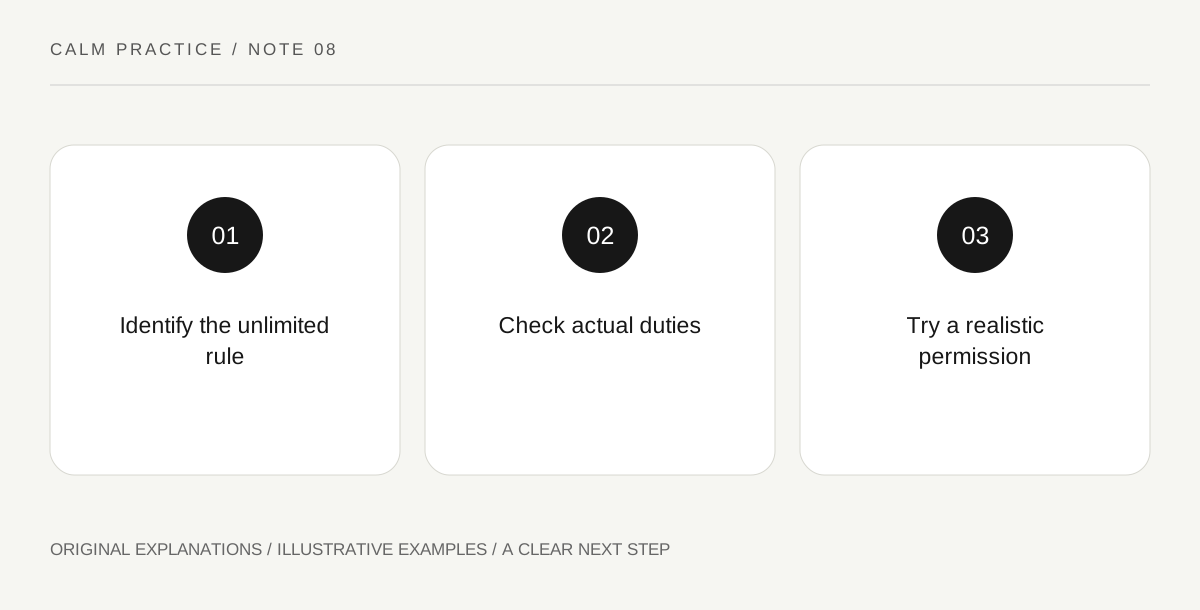
Thoughts and uncertainty3 min read
A free moment can feel uncomfortable when an internal rule says every task must be complete before rest is allowed. The rule may be impossible to satisfy in ordinary life. A balanced review distinguishes real responsibilities from an unlimited condition, without pretending that a personal pause can solve workload or care arrangements on its own.
Read the guide ↗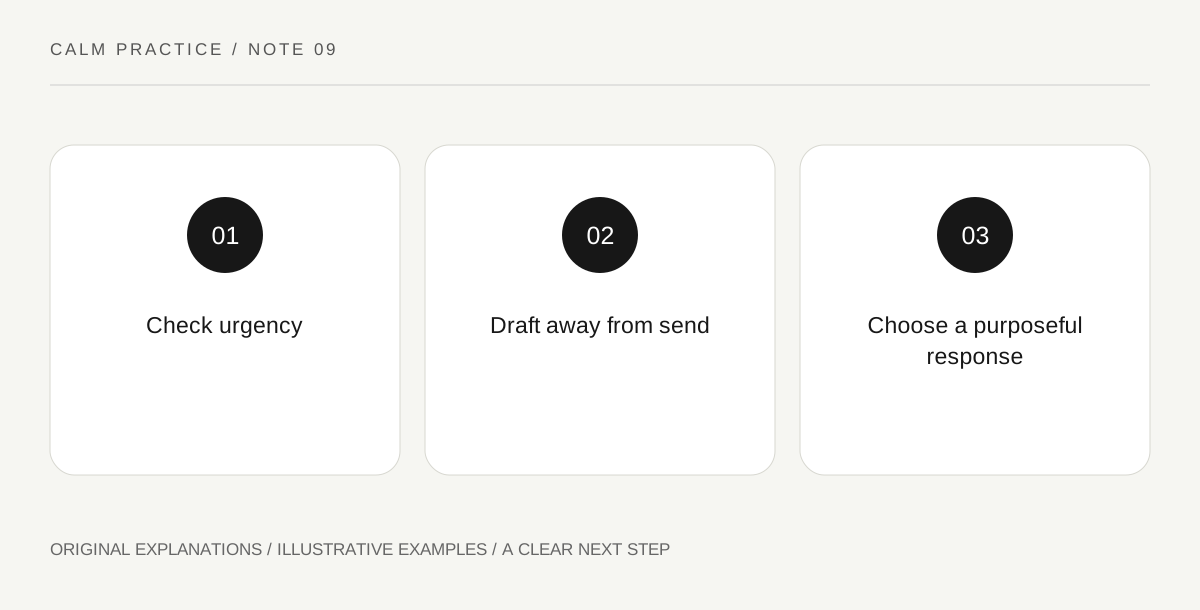
Everyday reactions3 min read
A frustrating message can create an urge to respond before you know what you want the reply to achieve. A pause gives the communication a second decision point. It does not require denying anger, tolerating abuse or delaying a genuine emergency; it helps keep an ordinary response connected to a clear purpose.
Read the guide ↗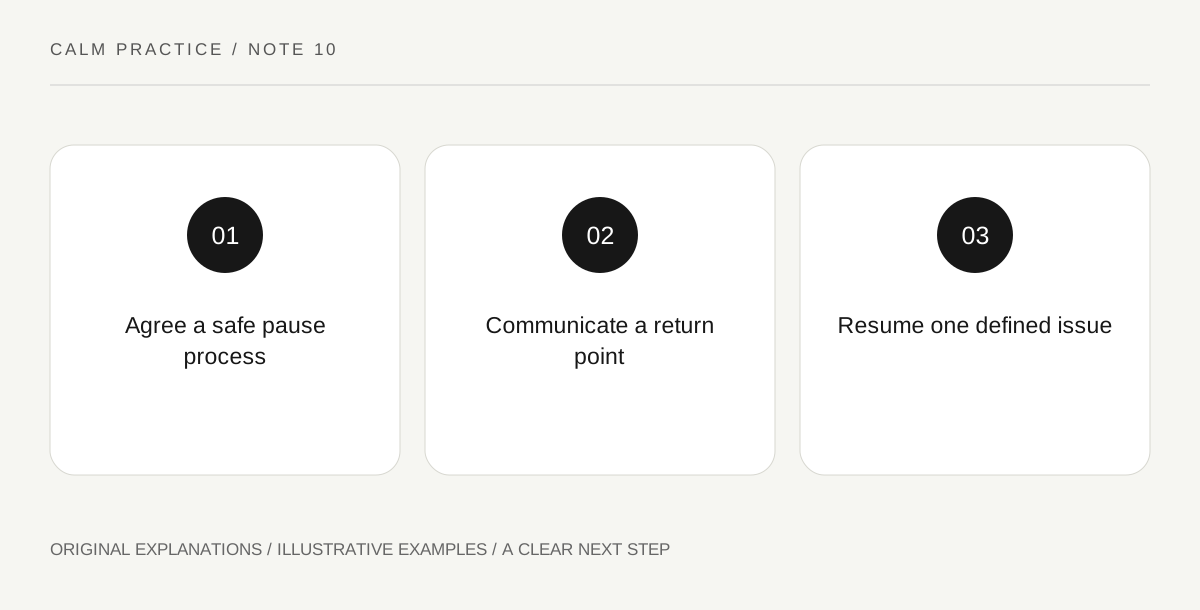
Everyday reactions3 min read
A pause can help an ordinary disagreement become more manageable when both people know what it means. Without that agreement, leaving the room may feel like abandonment or a way to avoid the issue. A useful pause includes safety, a clear return plan and freedom from pressure, rather than a demand that everyone calm down on command.
Read the guide ↗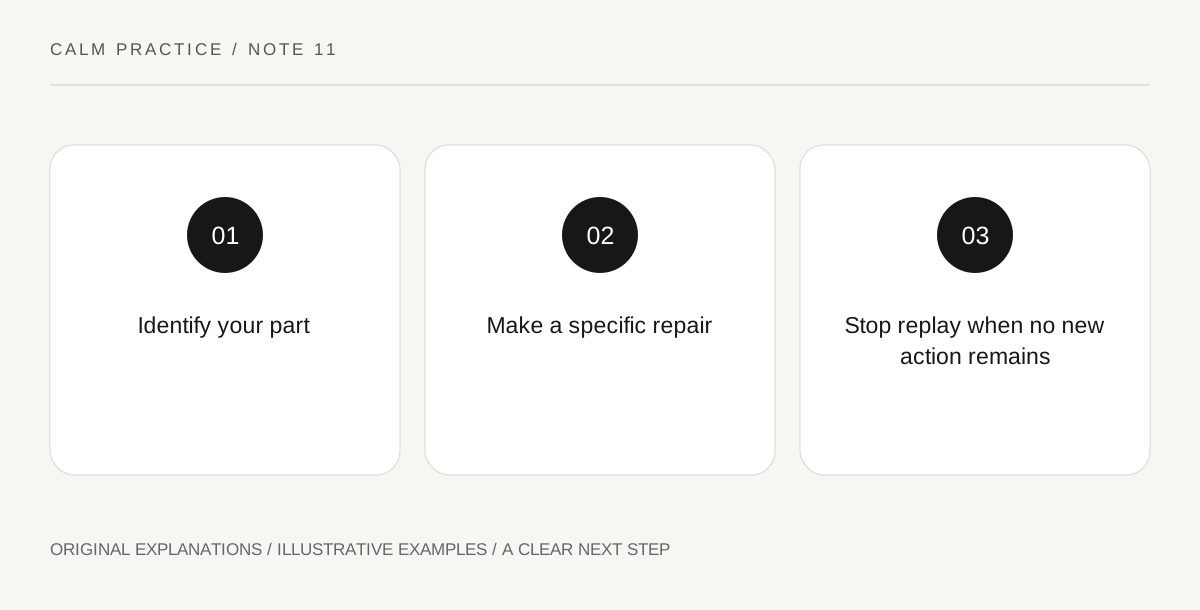
Everyday reactions3 min read
A difficult exchange can continue internally long after the practical conversation ends. A useful repair names your part, addresses a concrete impact and leaves room for the other person's response. It does not require repeated apologies until you feel reassured, or accepting responsibility for everything that happened.
Read the guide ↗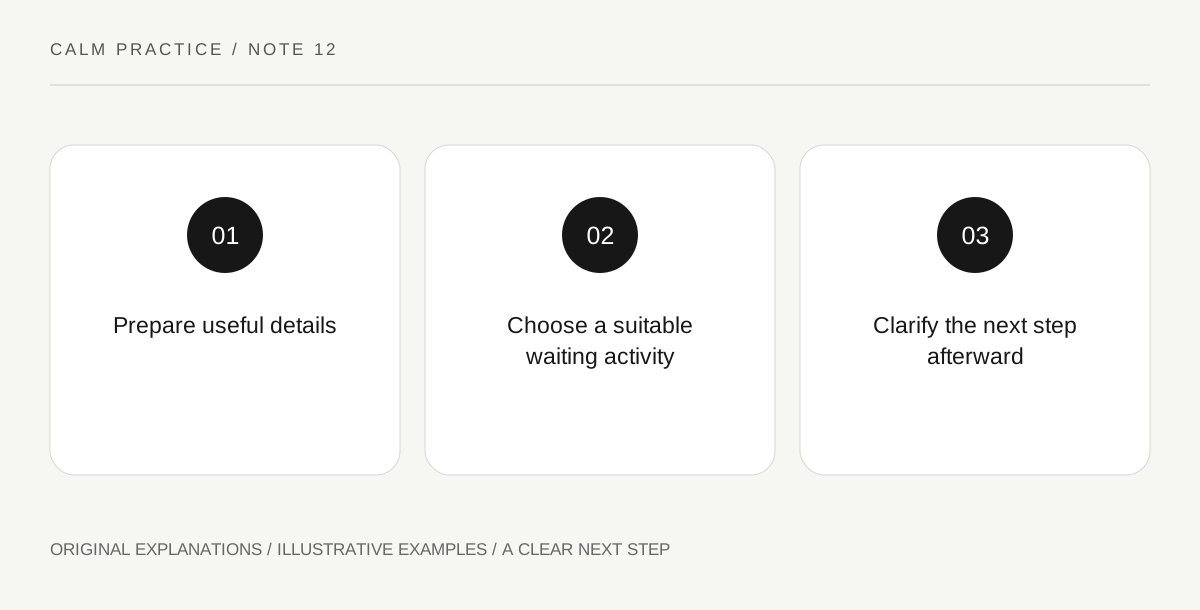
Everyday reactions3 min read
Waiting for an appointment can leave a gap that fills with repeated predictions. A practical waiting plan separates preparation from speculation and makes the setting easier to use. It does not promise a particular outcome or treat worry as a failure; it gives the next hour a clearer shape.
Read the guide ↗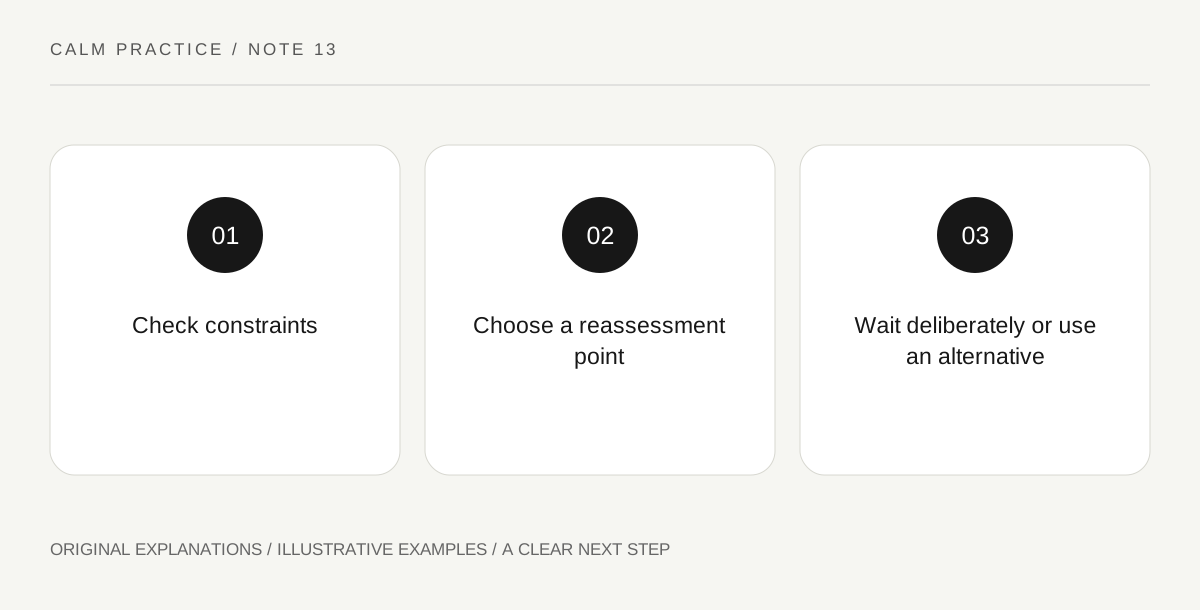
Everyday reactions3 min read
A slow line can create frustration because the next few minutes feel outside your control. A useful response identifies the decision you still have: wait, ask, choose an alternative or leave. This is an ordinary planning tool, not a demand to enjoy delays or tolerate unsafe conditions.
Read the guide ↗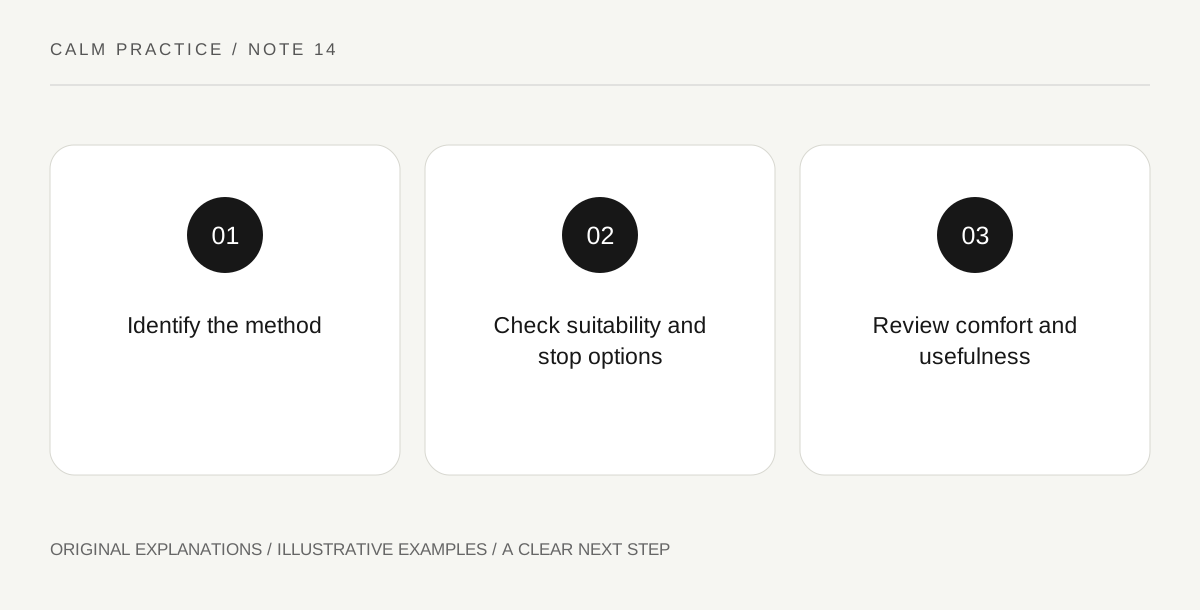
Optional practices3 min read
Some relaxation recordings ask you to tense and release muscles, while others use gentler attention or imagery. The methods are not interchangeable for everyone. Choosing a comfortable suitable approach matters more than completing every cue, especially when pain, injury or a health condition affects what you can do.
Read the guide ↗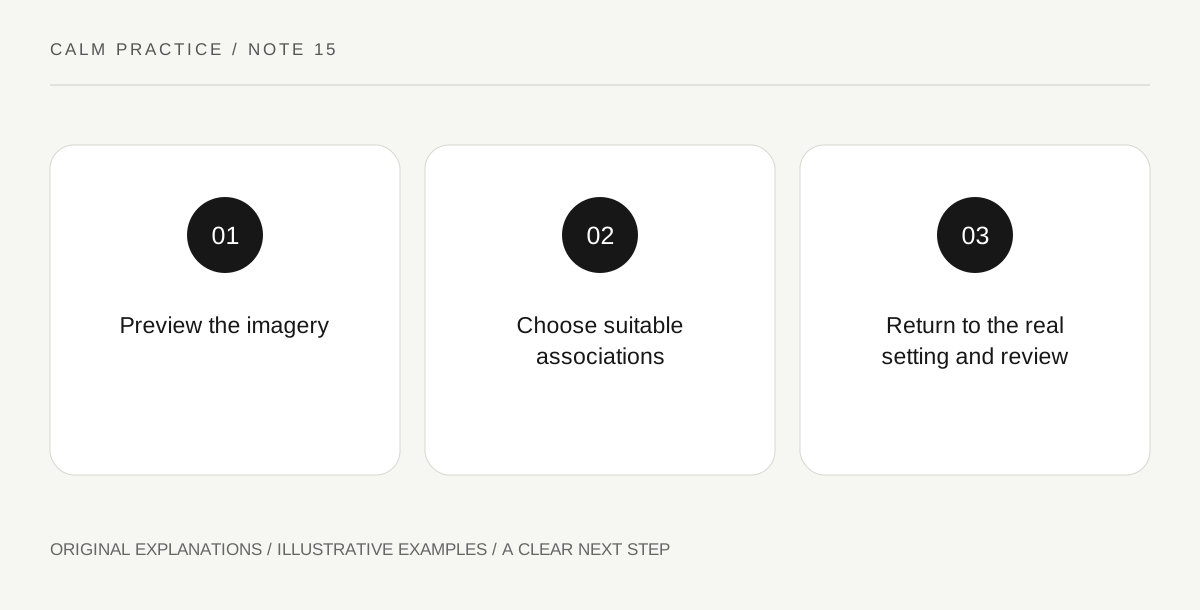
Optional practices3 min read
A relaxation script may invite a beach or forest image that feels pleasant to one person and unwelcome to another. Guided imagery is optional, and vivid mental pictures are not an achievement requirement. A useful choice respects your own associations, the source's limits and the option to stop.
Read the guide ↗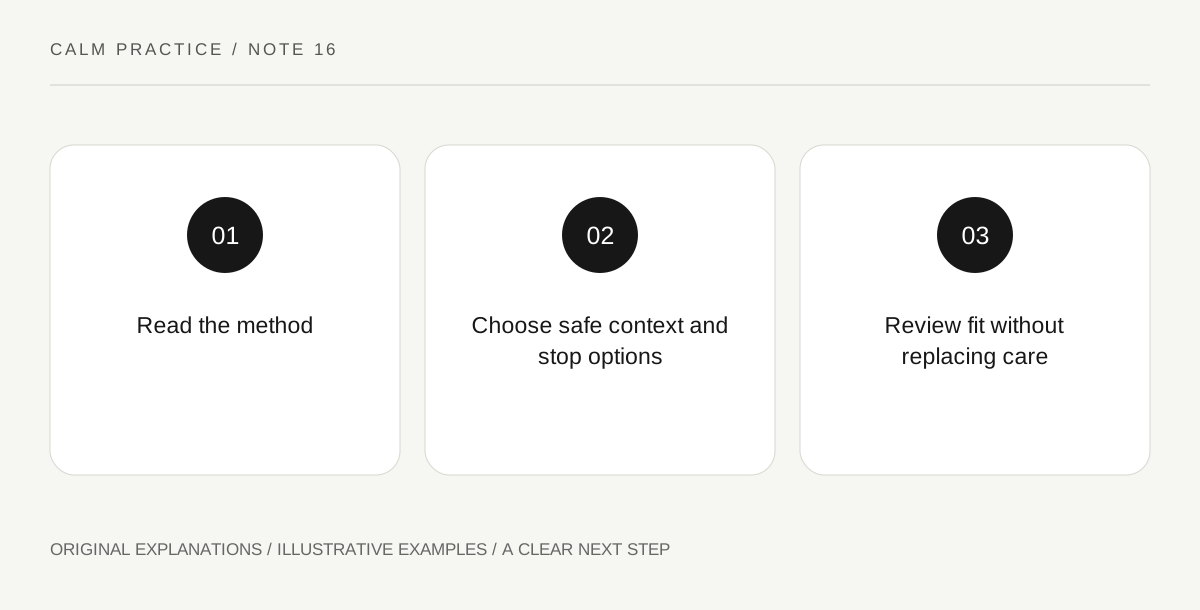
Optional practices3 min read
Meditation can mean several kinds of attention practice, and a long eyes-closed recording is only one format. A useful choice begins with source, setting and the ability to stop. It does not require a silent mind, a dramatic experience or replacing treatment with a wellness subscription.
Read the guide ↗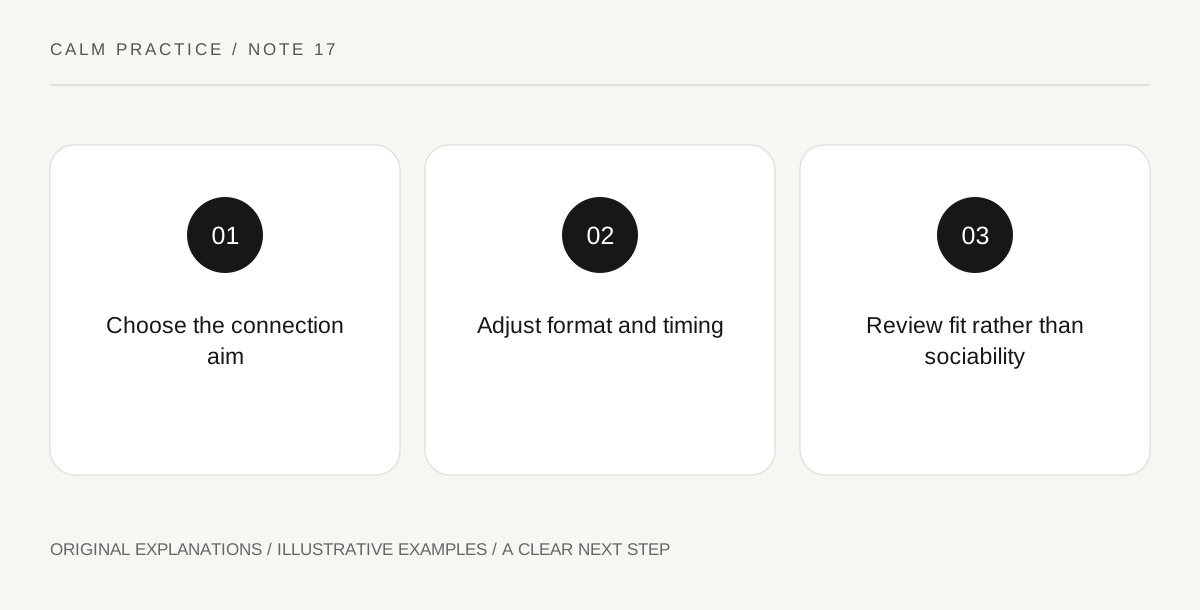
Sustainable wellbeing3 min read
Wanting connection and having limited energy can coexist. A large gathering is not the only form of contact, and declining it does not have to mean withdrawing from everyone. A useful decision considers the person, setting, duration and exit arrangement without prescribing how social an adult should be.
Read the guide ↗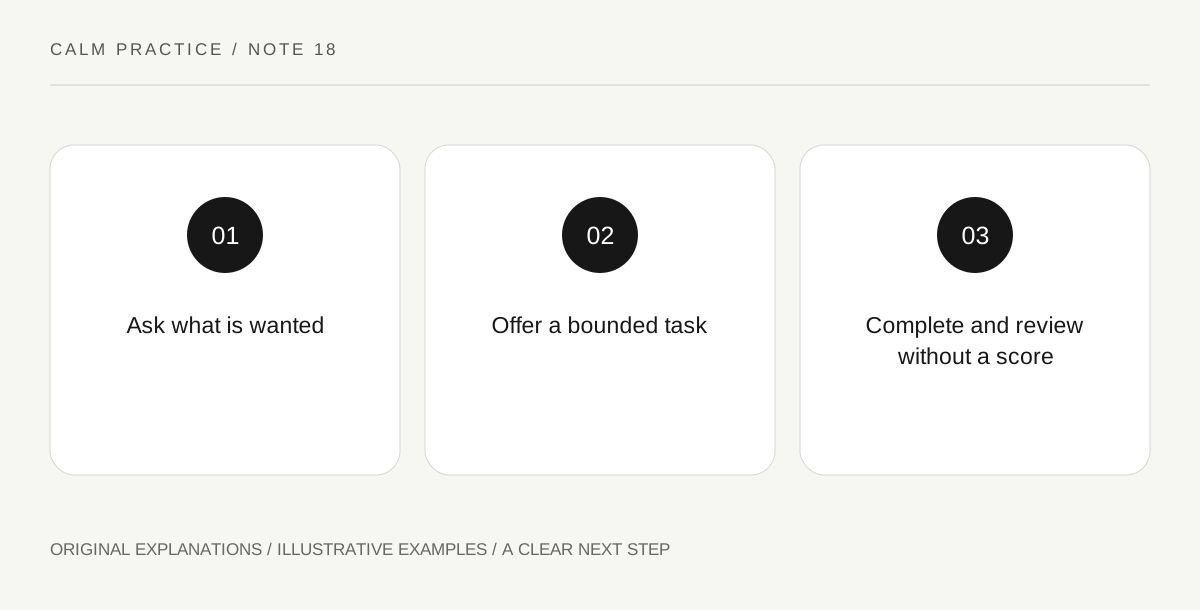
Sustainable wellbeing3 min read
Helping can be meaningful without becoming an unlimited obligation. A bounded act of kindness makes the offer clear to both people and leaves room for consent. The aim is useful connection, not earning a mood improvement, rescuing someone without permission or taking responsibility beyond your role.
Read the guide ↗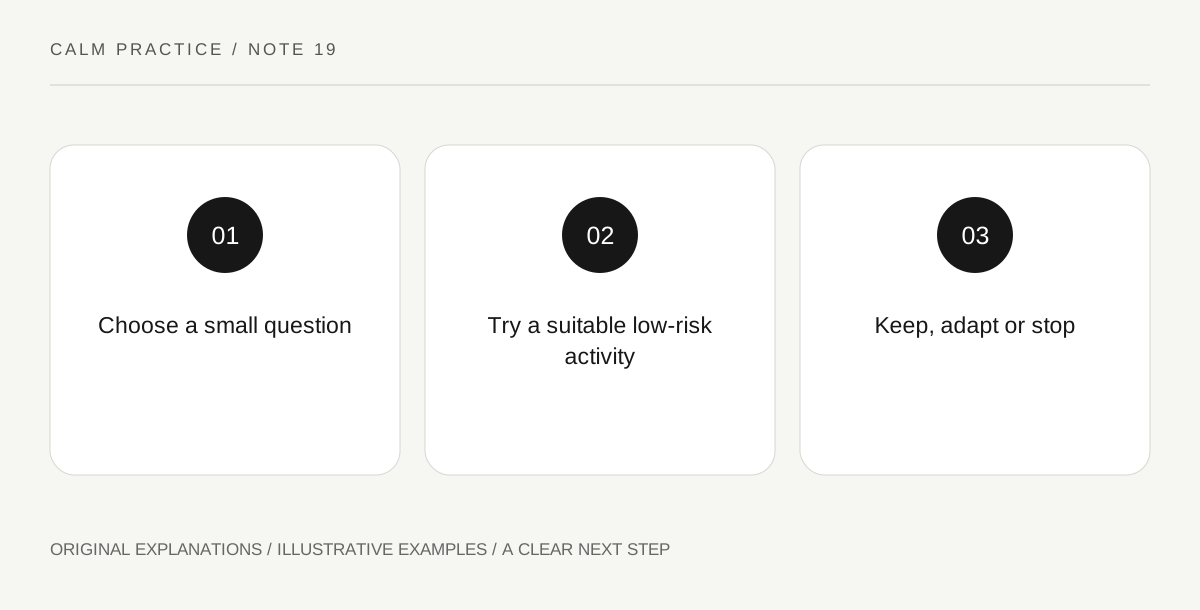
Sustainable wellbeing3 min read
A new practice can become demanding when it arrives with equipment, a streak and a promise to transform you. A small experiment asks a narrower question: does this activity fit my day and feel worth repeating? It leaves room to change your mind without treating a stopped routine as failure.
Read the guide ↗
Sustainable wellbeing3 min read
A feed full of recovery routines can make an ordinary day feel medically incomplete. More advice is not always more useful. A practical review separates a clear optional activity from a dramatic claim, then chooses what deserves attention without replacing qualified care or turning every sensation into a problem to optimize.
Read the guide ↗